Text cloud for paper in press
A text cloud meme worked it’s way through the geoblogosphere earlier this year but since that time, the Wordle tool, which creates the coolest looking images, has become the text cloud-making tool. See saxifraga’s entire dissertation here.
I’ve been super busy lately for several reasons … one of them was getting revisions done for a paper that is now finally “in press” for GSA Bulletin. When it actually comes out I’ll post about it, but in the meantime here’s the cloud.

Now only if I could focus for a day or two to put the finishing touches on another manuscript and submit the dang thing!
~~~~~~~~~~~~~~~~~~~~~~~~~~~~~~~~~~~~~~~~~~~~~~~~~~
100 things you’ve done meme
I guess it’s meme-time again … they always seem to come in waves of two or three. This one is a list (I have no idea where the original came from) where you indicate what you have done in bold. Like others, I’ll include some paranthetical commentary.
1. Started my own blog (duh, you’re reading it right now)
2. Slept under the stars (west Texas, Utah)
3. Played in a band (a few actually, but not right now)
4. Visited Hawaii
5. Watched a meteor shower
6. Given more than I can afford to charity
7. Been to Disneyland/world
8. Climbed a mountain (usually the same ones over and over … until I got all the data)
9. Held a praying mantis
10. Sung a solo
11. Bungee jumped
12. Visited Paris
13. Watched lightning at sea
14. Taught myself an art from scratch
15. Adopted a child
16. Had food poisoning (South Africa)
17. Walked to the top of the Statue of Liberty
18. Grown my own vegetables
19. Seen the Mona Lisa in France
20. Slept on an overnight train
21. Had a pillow fight
22. Hitchhiked
23. Taken a sick day when you’re not ill
24. Built a snow fort (memories of the Blizzard of ’85)
25. Held a lamb
26. Gone skinny dipping
27. Run a Marathon
28. Ridden in a gondola in Venice
29. Seen a total eclipse
30. Watched a sunrise or sunset
31. Hit a home run
32. Been on a cruise (does a research cruise count?)
33. Seen Niagara Falls in person
34. Visited the birthplace of my ancestors
35. Seen an Amish community
36. Taught myself a new language
37. Had enough money to be truly satisfied
38. Seen the Leaning Tower of Pisa in person
39. Gone rock climbing
40. Seen Michelangelo’s David
41. Sung karaoke
42. Seen Old Faithful geyser erupt
43. Bought a stranger a meal at a restaurant
44. Visited Africa
45. Walked on a beach by moonlight
46. Been transported in an ambulance
47. Had my portrait painted
48. Gone deep sea fishing
49. Seen the Sistine Chapel in person
50. Been to the top of the Eiffel Tower in Paris
51. Gone scuba diving or snorkeling
52. Kissed in the rain
53. Played in the mud (and in the sand)
54. Gone to a drive-in theater
55. Been in a movie
56. Visited the Great Wall of China
57. Started a business
58. Taken a martial arts class
59. Visited Russia
60. Served at a soup kitchen
61. Sold Girl Scout Cookies
62. Gone whale watching
63. Got flowers for no reason
64. Donated blood, platelets or plasma
65. Gone sky diving
66. Visited a Nazi Concentration Camp
67. Bounced a check
68. Flown in a helicopter
69. Saved a favorite childhood toy
70. Visited the Lincoln Memorial
71. Eaten caviar
72. Pieced a quilt
73. Stood in Times Square
74. Toured the Everglades
75. Been fired from a job
76. Seen the Changing of the Guards in London
77. Broken a bone
78. Been on a speeding motorcycle
79. Seen the Grand Canyon in person
80. Published a book
81. Visited the Vatican
82. Bought a brand new car
83. Walked in Jerusalem
84. Had my picture in the newspaper
85. Read the entire Bible
86. Visited the White House
87. Killed and prepared an animal for eating
88. Had chickenpox
89. Saved someone’s life
90. Sat on a jury
91. Met someone famous
92. Joined a book club
93. Lost a loved one
94. Had a baby
95. Seen the Alamo in person
96. Swam in the Great Salt Lake
97. Been involved in a law suit
98. Owned a cell phone
99. Been stung by a bee
100. Ridden an elephant
–
I got some work to do!
~~~~~~~~~~~~~~~~~~~~~~~~~~~~~~~~~~~~~~~~~~~~~~~~~~
2008 end-of-year meme
Look out – here comes a bandwagon! A bunch of other bloggers are doing it … okay, I will too.
Here’s the deal — take the first sentence for the first post of each month for 2008 and put them together. Also … put in the first photograph of the month (about half of them are not from the same post – so they don’t all match).
–
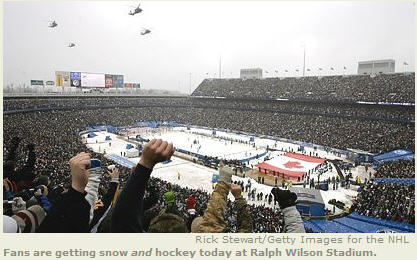
January: My first post of 2008 has absolutely nothing to do with Earth science.
–
February: It’s been a quiet week on Clastic Detritus … we went through a move earlier this week to be a little closer to my new job.

Folded chert of the Franciscan Complex, Marin Headlands, California (© 2008 clasticdetritus.com)
–
March: I’ve spent the last week or so in Chilean Patagonia co-leading a small, informal field trip around the rocks that me and several other students have worked on in the last several years.
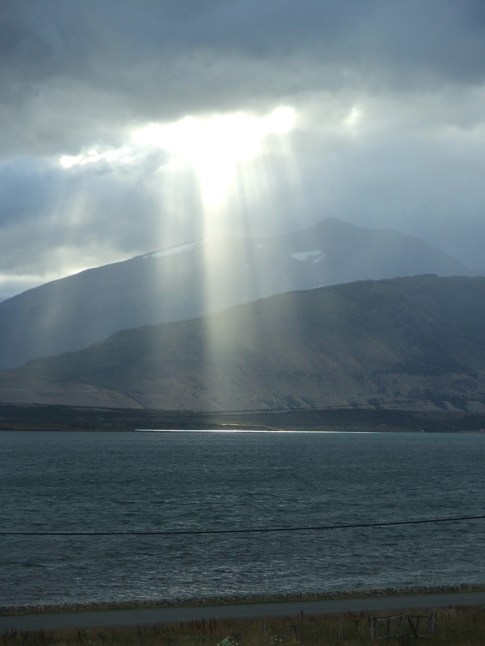
Seno Ultima Esperanza, southern Chile (© 2008 clasticdetritus.com)
–
April: I’m going to be traveling and away from a computer for the next couple of weeks, so don’t expect any new posts until I return.
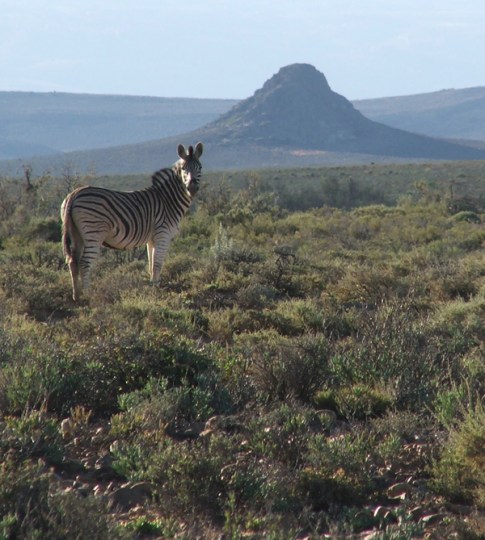
Zebra at the Inverdoorn game reserve, South Africa (© 2008 clasticdetritus.com)
–
May: I’ve been so patient … Finally, it seems that Google will do what I’ve been literally dreaming about.

Debris flow deposit, Owens Valley, California (© 2008 clasticdetritus.com)
–
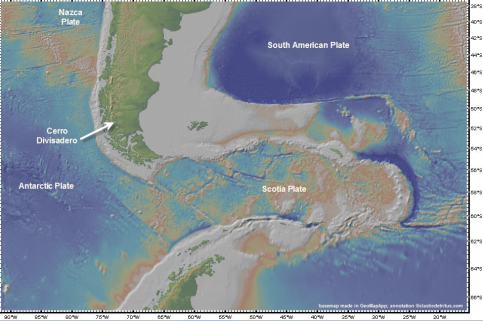
June: I guess I’m on a plate tectonics kick … the last few Sea-Floor Sundays have shown bathymetric (sea-floor topography) images at a scale where big-scale tectonic features are evident (see Scotia Plate, regional context of Chaitén volcano, and Gulf of California).
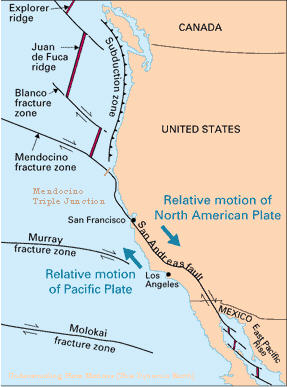
credit: USGS
–
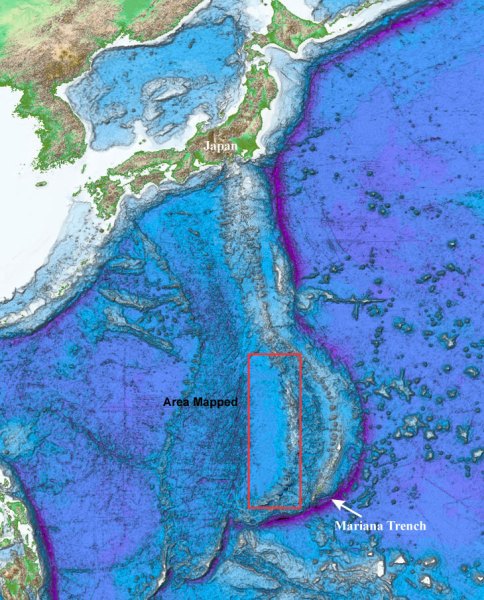
July: This intriguing press release just came across my reader.
credit: http://ccom.unh.edu/
–
August: A paper for a component of my PhD work is finally in press (woo hoo!). I will put together a post about it once it’s uploaded to Sedimentology’s website.
Basemap made in GeoMapApp
–
September: A few weeks ago I had the opportunity to go on a field trip to see some Neoproterozoic turbidites in the Canadian Rockies (see this post).
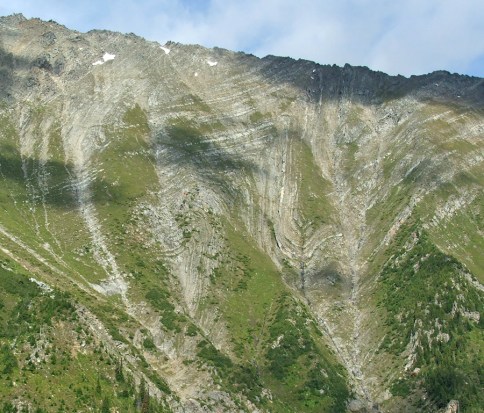
Folded Neoproterozoic turbidites, British Columbia (© 2008 clasticdetritus.com)
–
October: In 2006 I had the opportunity to go to a geology conference in Mendoza, Argentina on my way back from field work in Patagonia.
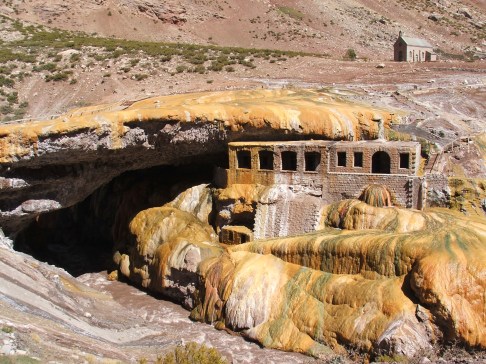
Puente del Inca, Argentina (© 2008 clasticdetritus.com)
–
November: With two days to go until the election, here’s a short video describing the electoral math problem that McCain must overcome to pull out a victory.

–
December: I am out of town this week helping teach a week-long class for work about — you guessed it, turbidites.

credit: http://terra.nasa.gov/
This is a very cool way to review the year, and nicely represents a lot of what I’ve blogged about this year … I enjoyed putting it together.
~~~~~~~~~~~~~~~~~~~~~~~~~~~~~~~~~~~~~~~~~~~~~~~~~~
AGU 2008 – info about session I’m chairing and blogger meet-up
The annual American Geophysical Union (AGU) meeting is next week already!
It is at San Francisco’s Moscone Center from Monday, December 15th – Friday, December 19th. You can see more details about the meeting here.
I am chairing a poster session that will be on Wednesday afternoon. We were two submissions shy of getting an oral session (needed 19, we got 17) but that’s cool, poster sessions can be tons of fun if well attended.
My co-convenor and I are both interested in unraveling the sedimentary record, but approach the endeavor slightly differently. I am more-or-less an observationalist — I go out in the field and look at outcrops or compile data from sea-floor/subsurface systems and characterize them. My colleague and co-convenor is more of an experimentalist — he works on scaled-down experiments and tries to tease out any and every relationship he can.
Our session is aimed at bringing together these different, yet inherently overlapping, approaches. Our goals are the same after all — to better understand the linkage between sedimentary process, morphology, and what actually gets preserved in the rock record (i.e., stratigraphy).
We have what looks like to be a great collection of studies — some that focus on natural systems, some on experimental, some that compare/constrast results from both, some that focus on fluvial/deltaic systems, some on turbidite systems, and so on. It should be fun. If you are at the meeting, stop by. You can find all the details here.
–
The other bit of business is to organize a meet-up for those attending the meeting. Kim put up a post earlier today with more info. Looks like Wednesday evening is the day and, as I write this, people were discussing a place and more details.
~~~~~~~~~~~~~~~~~~~~~~~~~~~~~~~~~~~~~~~~~~~~~~~~~~
The Accretionary Wedge: Favorite Field Site
This week is turning out to be one of the busiest weeks I’ve experienced in a while — so, I’m going to be super-lame and recycle an old post for the latest Accretionary Wedge geoscience blog carnival. It’s being hosted by DaveS over at the Geology News blog — check it out.
This month’s theme is “favorite places to do field work”. Although I talk about Patagonia a lot on this blog … probably seems like every other post to you guys … it is because it truly is a magnificent place. I have now spent more combined weeks doing field work there than anywhere else on the planet.
So, instead of just copying in the whole post here, you can simply click here to read about the site where I did a large component of my Ph.D. research. After that, check out this post, which summarizes a recently published paper about the study.
If I had more time with this, I would love to highlight some of my other favorites areas — Utah, west Texas, Canadian Rockies, and, of course, California.
~~~~~~~~~~~~~~~~~~~~~~~~~~~~~~~~~~~~~~~~~~~~~~~~~~
Agriculture on the outer part of an alluvial fan
A reader from Germany alerted me to a cool image from the Terra satellite. This is from southern Iran and shows how they are dealing with the lack of fertile ground and water in this desert region.
The greenish colors in the image below highlight the distribution of agricultural land on the depositional landforms in the valley (clicking on the image will take you to a much larger [3 MB] version of the image directly from the NASA Terra site).

image credit: http://terra.nasa.gov/
The image below zooms in to the beautiful alluvial fan. Note how the agricultural land is out on the outer part of the fan. In most alluvial fans there typically an overall decrease in grain size in a downfan direction — that is, coarser-grained material in the updip (proximal) areas of the fan and finer-grained material in the outer (distal) fan. What the exact grain size distribution is for this fan depends a lot on the rock types in the mountainous area being eroded but the trend from proximal to distal is common.

image credit: http://terra.nasa.gov/
In this case, my educated guess is that the farmers are taking advantage of the finer-grained deposits out on the outer part of the fan. It would be fun to get on the ground and test that idea. I also wonder how they deal with water. The gray bifurcating threads in the upper-left part of the fan are the currently-active channels — perhaps they capture water during active periods and then distribute to other regions?
Perhaps some of you know of other examples of alluvial fan agriculture?
~~~~~~~~~~~~~~~~~~~~~~~~~~~~~~~~~~~~~~~~~~~~~~~~~~
Teaching training courses
I am out of town this week helping teach a week-long class for work about — you guessed it, turbidites. The class is all day everyday, which explains the dearth of posts lately. It is very difficult to keep up with e-mails, much less blogs, while teaching all day.
The teaching aspects involved with this kind of class are interesting and uniqe in some ways — short duration, somewhat intense, highly specialized, emphasis on application, and teaching educated and technically-competent adults. Our goal by the end of the week is that the students can take the concepts and tips we’ve shown them and actually apply them when relevant to their work. At the very least, we hope they gain a level of familiarity that allows them to communicate better with their coworkers.
I know there are some educators and teachers who read this blog — it might be interesting to get some discussion and perspective from those who have done some training-type teaching. Not so much about specific classes or disciplines — but some general thoughts on teaching styles, challenges unique to this setting, or other anecdotes.
~~~~~~~~~~~~~~~~~~~~~~~~~~~~~~~~~~~~~~~~~~~~~~~~~~
Sea-Floor Sunday #36: Gulf of Maine
I hope all those in the States had a nice Thanksgiving holiday. I spent the long weekend in Boston visiting some family. I am in the airport now but, unfortunately, not heading home. I will be traveling for the next six days but may be able to blog a bit here and there. Regular posting should resume next week.
In the spirit of my visit to Boston, this week’s Sea-Floor Sunday shows the Gulf of Maine offshore of southeastern Canada and New England.
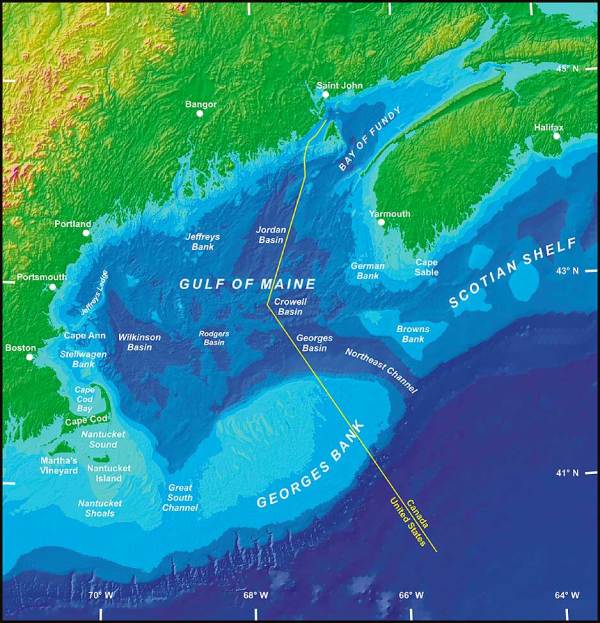
Gulf of Maine bathymetry (credit: http://www.necwa.org/gulf-maine.html)
Clicking on the image (or going here) will take you to the page where I found this image.
Although I haven’t studied this area in any detail, my guess is that the Northeast Channel is a similar to the Laurentian Channel, a glacial outwash feature that formed during the Last Glacial Maximum lowstand in sea level during the late Pleistocene (~20,000 yrs ago), when the coastline was out at the edge of the continental shelf.
–
see all Sea-Floor Sunday posts here.
~~~~~~~~~~~~~~~~~~~~~~~~~~~~~~~~~~~~~~~~~~~~~~~~~~
Radiolaria and jazz
One of my favorite musical groups is a NYC jazz trio called Medeski, Martin, & Wood (kinda sounds like a law firm, but they are way cooler than lawyers, no offense).
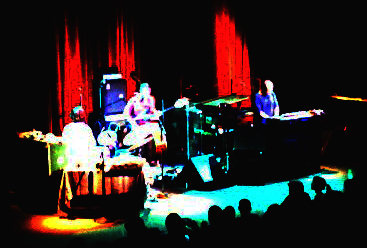 These guys have been around since the early ’90s and I’ve been buying their albums and going to their shows since the mid to late ’90s. MMW is an instrumental trio with John Medeski on pianos, Chris Wood on the basses, and Billy Martin on percussion. Their music is tough to pin down — it’s all jazz I suppose, but they span a broad range of rhythmic styles from groove to funk to latin or afro-cuban. And they aren’t afraid to get all weird and avant-garde from time to time, which can be interesting.
MMW is one of those bands that I enjoy seeing at a show much more than listening to them at home or on an iPod. There’s something about how they interact and communicate with each other on stage that I find really cool. It feels like your witnessing art take place right there at that moment. Read this recent brief interview with them from the LA Times to learn a bit more.
Anyway, my wife and I went and saw them last week at the famous Fillmore in San Francisco. MMW likes to do things a little different – they are constantly trying new ways of both creating music and bringing it to listeners. Their latest project is called the Radiolarian Series — here’s a blurb from their website:
In February MMW began their RADIOLARIAN SERIES, a three run, three record project. In direct contrast to they way things are usually done, MMW decided to spend 2008 composing the skeleton of new music, taking it on the road to flesh out the compositions, and finally putting the by now well played notes down as tracks. Write > Tour > Record > Repeat. Three times.
Awesome. Why is it called the Radiolarian series?
These unicellular planktonic marine organisms grow their intricately beautiful patterned skeleton around their soft core in defiance of normal biological process, similarly to Medeski Martin and Woods latest creative cycle.
Dorks! They also make mention of Ernst Haeckel’s famous artwork of radiolaria.

The 1st plate from Ernst Haeckel's Kunstformen der Natur (1904), depicting radiolarians, classified as Phaeodaria (credit: http://en.wikipedia.org/wiki/Radiolaria)
What’s my point? Nothing really … just thought it was cool that one of my favorite bands is this nerdy. The show was really good … check ’em out next time they are in your town.
~~~~~~~~~~~~~~~~~~~~~~~~~~~~~~~~~~~~~~~~~~~~~~~~~~
Sea-Floor Sunday #35: Nisqually Delta, Puget Sound
This week’s Sea-Floor Sunday image is from the Nisqually Delta in southernmost Puget Sound, near Olympia, Washington — I suppose this isn’t technically the sea floor … but hey, it’s bathymetry data … close enough.
The reds/yellows represent shallower regions, the blues/purples are deeper. Distance across image is ~10 km.
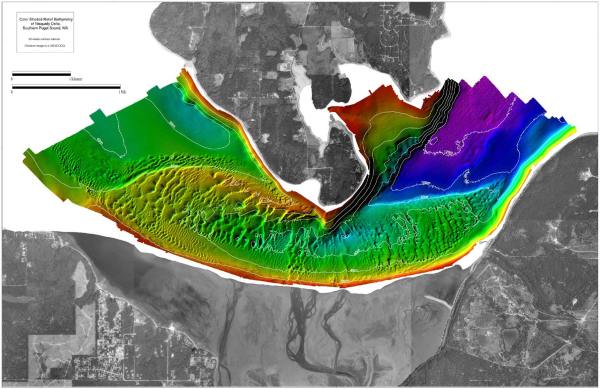
credit: USGS Western Coastal & Marine Geology (http://walrus.wr.usgs.gov/pacmaps/ps-nis.html)
If you click on the image you’ll go to the USGS page where I found it. One of the main objectives of collecting this data was to examine potential changes caused by a 6.8 earthquake in this area in 2001. The bathymetric data above was collected only a few weeks after the earthquake. The researchers note that the relatively steep scarp along the northeastern delta front (from green to blue colors) is a landslide scarp from an older event (because it was visible in data acquired prior to the 2001 quake).
The main page of that Open File report has links to more information about other deltas in Puget Sound that were examined at the same time and data you can download. This page will link you to more bathy images.
–
see all Sea-Floor Sunday posts here.
~~~~~~~~~~~~~~~~~~~~~~~~~~~~~~~~~~~~~~~~~~~~~~~~~~


 Clastic Detritus