I saw this graph over at Ezra Klein’s blog and was pretty surprised.
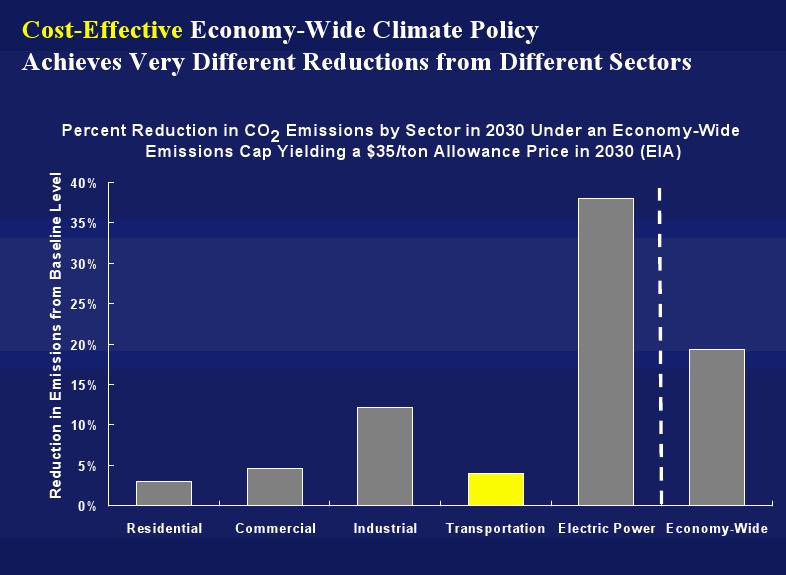
It shows the percent reduction in CO2 emissions by sector by 2030 assuming the carbon cap-and-trade program outlined in the House of Representatives energy and climate bill (aka Waxman-Markey), or something like it, passes Congress.
credit: Robert Stavins (from http://voices.washingtonpost.com/ezra-klein/2010/06/what_to_do_in_the_absence_of_c.html)
What surprised me is how little the reduction would be in the transportation sector (~5%) compared to the electric power sector (nearly 40%).
No link was posted to a more comprehensive report so what you see is what you get — I don’t know any more details of this analysis. What’s unclear to me in this graph is if the relatively small amount in CO2 emission reduction in the transportation sector is because we simply can’t make internal combustion engines significantly more carbon-efficient than they already are or does it have something to do with increasing usage of electric and hybrid-electric cars?
Either way, it highlights how important it is to scientifically and financially invest in transforming the way we generate electricity. In the U.S. over half of the electricity generated is from coal-fired power plants with an additional >20% coming from natural gas. What would be interesting to see in this analysis is how that tallest bar in the graph breaks down in terms of what contributed to the reduced emissions. That is, how much of that is from increased nuclear electricity generation? How much from solar or wind? How much from carbon capture and storage? And so on.
The author of this plot is Harvard professor Robert Stavins — maybe I’ll explore his blog sometime soon to find some answers to these questions.
This week’s Friday Field Foto is from the Andes Mountains in central Argentina, not very far from Cerro Aconcagua. I went to Mendoza for a conference in 2005 on the tectonics of western North and South America (called the “Backbone of the Americas”) and there was a day field trip up into the mountains. We stopped along the way at a place called Puente del Inca where people had set up these small huts to sell tourists (or geologists) various Andean goodies.
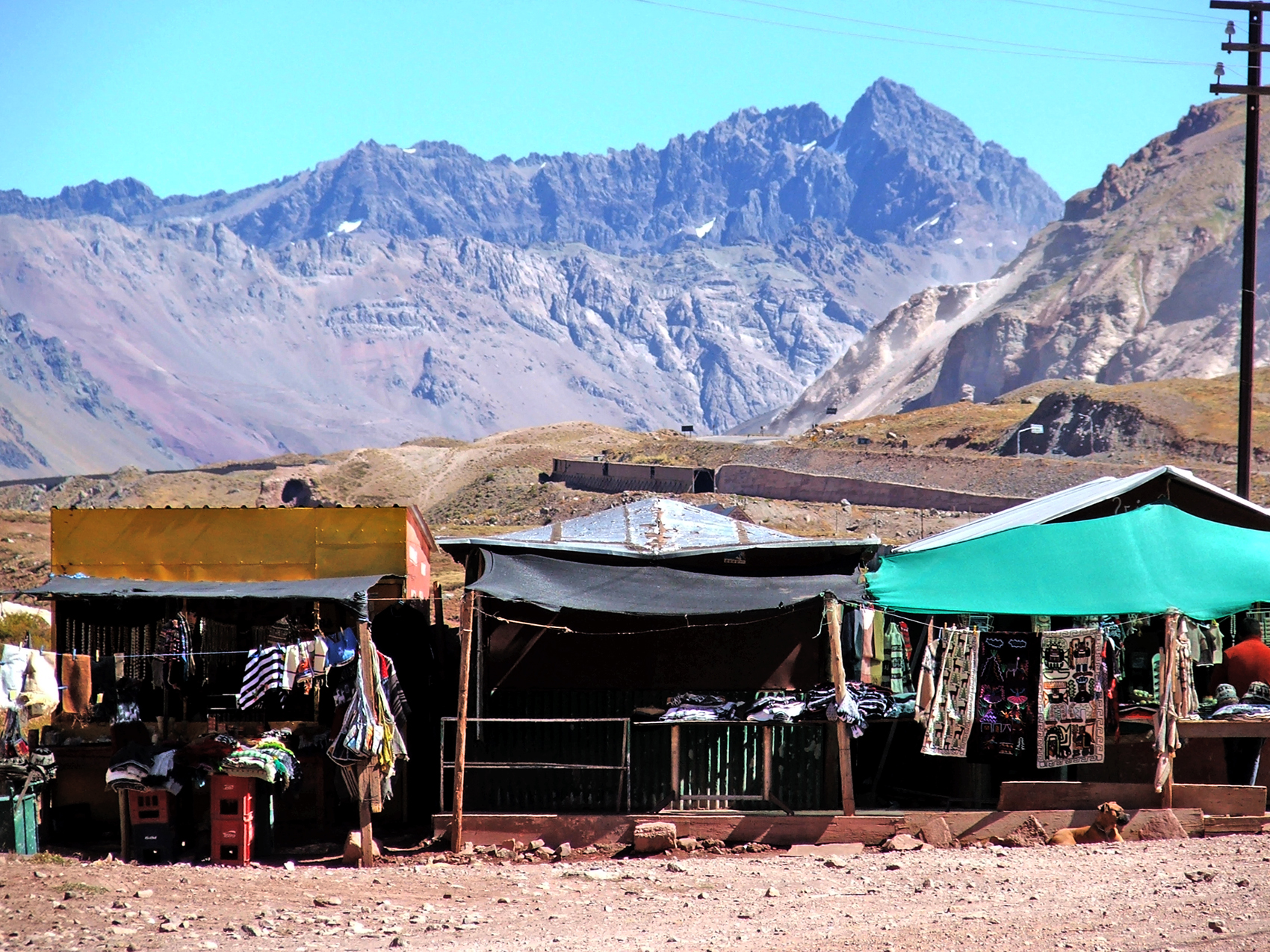
Mendoza Province, Argentina (© 2010 clasticdetritus.com)
Happy Friday!
Gulf oil disaster: It’s everybody’s Katrina
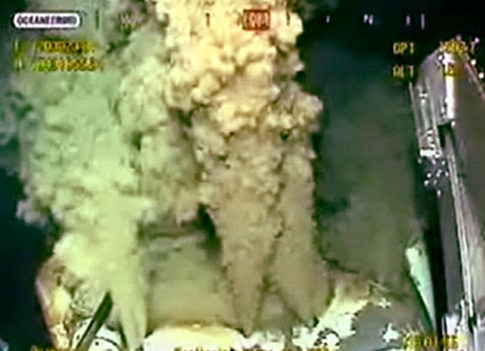 I was having a discussion with some folks on Twitter about an op-ed piece in American Thinker called Big Government’s Katrina. Conservatives who dislike the Obama administration have been calling the blowout (still not fully contained 45 days on) “Obama’s Katrina” as an attempt to pin blame on him. The author of this op-ed also utilizes this rhetoric by placing blame on Obama specifically, and then takes it a step further by putting it on “big government”:
The mess in the Gulf of Mexico is not just Obama’s Katrina. It is Big Government’s Katrina.
First of all, I suppose those who use this talking point are now admitting that response to Katrina was a human failure. That’s something. Second, the federal government’s response to this blowout disaster could have been (and still could be) much better. No doubt about it. Watching what seems to be a futile exercise in capping this thing and trying to skim this gigantic slick is incredibly frustrating.
The federal government is without a doubt part of this problem. I have no issue with that. But what this op-ed tries to argue, and very poorly in my opinion, is that industry was an innocent bystander:
What was the use of all the regulations and the permits for BP’s Deepwater Horizon? In the end, they failed. Did they fail because the regulation wasn’t rigorous enough? Did they fail because the regulators were “captured” by the oil industry? Or did they fail because the regulations diverted the thinking of BP’s engineers into drilling to the regulation instead of acting as responsible agents?
Oh brother, did you get that last bit? There were so many regulations that the engineers couldn’t focus on doing a safe job! Oh my, what a load of horse-puckey. This is what passes as a logical argument? Really?
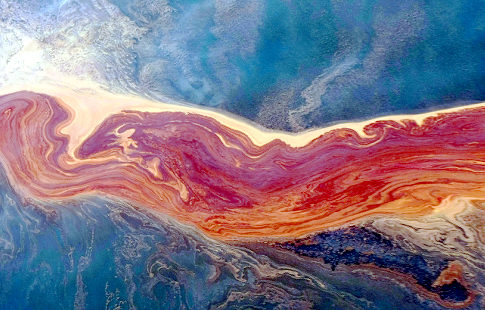
I’m really getting tired of the notion that if these benevolent corporations could just be free — if they could only break the shackles of an oppressive and evil government, blah blah bladdity-blah — then they would operate in perfect harmony with society and nature. Doesn’t that sound nice? Where is the model of this libertarian utopia in the modern world? Maybe here?
 I’m not saying corporations shouldn’t exist and shouldn’t be allowed to make money. They provide the vast majority of us with jobs and are a key component of our economy and society. I believe that competition amongst entities in the private sector does indeed drive innovation (we are seeing this happen in the green tech industry right now). I am a proponent of letting business self-organize into the “best” configuration. But many systems that self-organize are also characterized by threshold behaviors that lead to cascading failures and abrupt upheavals of the “stable” state. We see this happen again and again. I’m of the opinion that government’s role is to (1) help develop some rules that prevent, or at least minimize, major upheavals and (2) respond swiftly and effectively when they do occur. This op-ed seems to be arguing that if there were fewer and/or less strict rules then this catastrophe would not have happened in the first place. This is blind devotion to a theory that seems to only work in scholarly papers. And I have a feeling this twisted little meme is going to make the rounds in the coming weeks with all flavors of corporate apologists.
The op-ed closes by saying that “big government can’t get the job done”, referring to the response of this disaster. I agree! But neither can industry. They are both demonstrating everyday just how unprepared we are for this event. We will continue to drill in deep water offshore. No matter how much technology is developed we can NEVER guarantee a blowout won’t happen again. Whether it’s an oil company CEO, a safety regulator, or Obama himself — if someone claims drilling offshore is 100% safe they are full of it. We must assume that another blowout will occur and be prepared. If it means surrounding every drill rig at all times with a fleet of 100 support ships equipped to deal with it, then so be it. If it means that these wells cost 10, 50, or 100 times more than they already do, then so be it.
Finally, all of us keep consuming this stuff — we love it, we can’t get enough of it. While culpability for the specific event falls squarely on the failings of industry and government, we all keep buying and using oil. I’m convinced that the only way to truly break our addiction is to make it prohibitively expensive. For example, would you be okay with a 1000% tax on a gallon of gasoline (and jet fuel) that went towards funding aggressive development and implementation of other fuels?
Friday Field Foto #112: Looking up towards sea level
This week’s Friday Field Foto is from a place where you need look upwards to see sea level (and still stay dry) — Death Valley! This is from the small settlement of Badwater, California.

Sea level sign, Badwater, California (© 2010 clasticdetritus.com)
Happy Friday!
credit: President of Plaquemines Parish
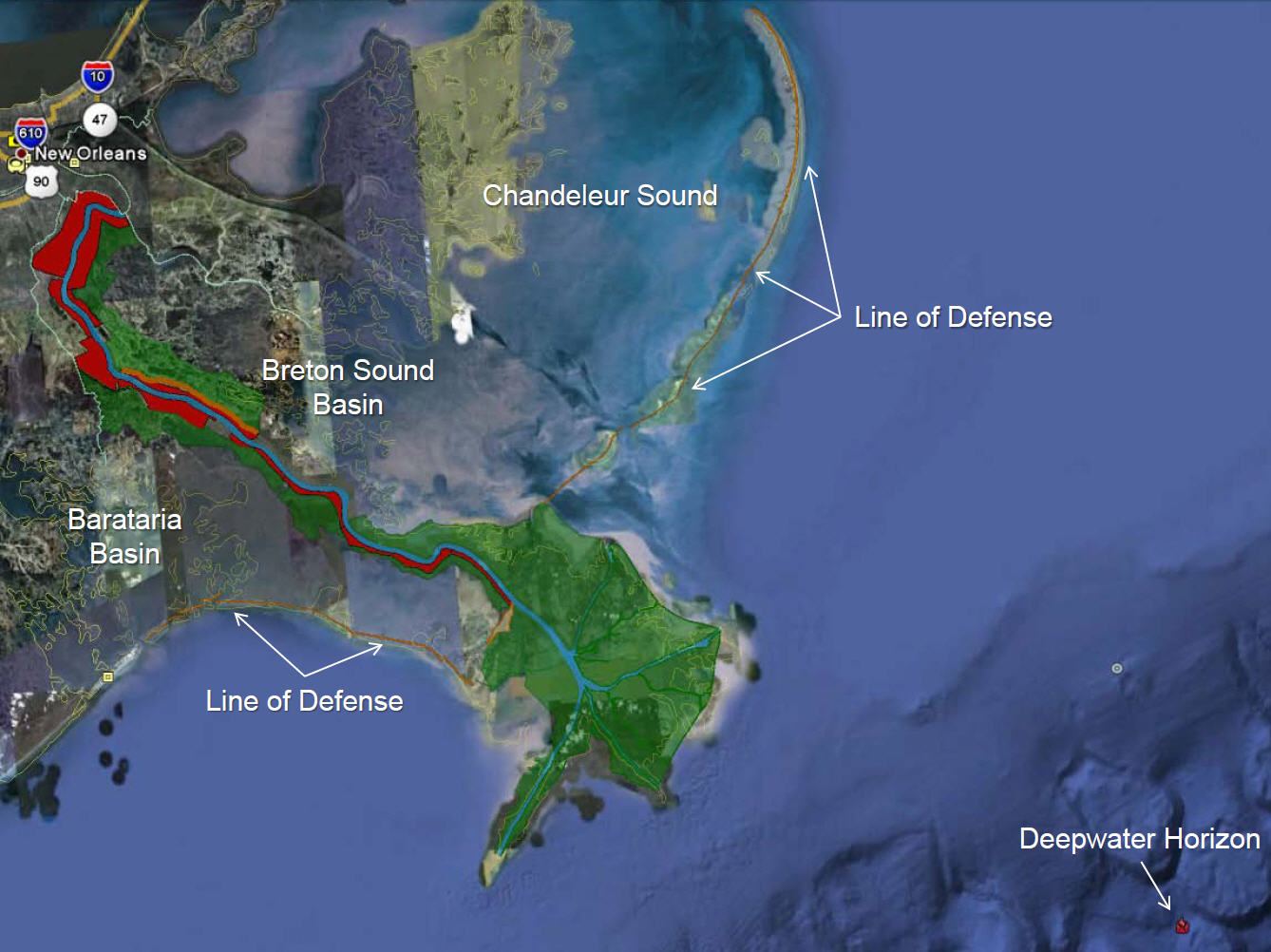
I wanted to take this opportunity to point out and direct you to the first-rate blogging on this subject by Michael Welland at his blog Through the Sandglass. Michael has three posts about the potentially ill-conceived geoengineering idea to frantically construct artificial barrier islands offshore of the Mississippi delta wetlands.
- May 23rd, 2010 — 80 miles of sand berms?? Experts express doubts …
- May 28th, 2010 — Gulf sand berms: a massive and risky experiment
- June 1st, 2010 — Berms continued: what exactly is the plan?
- June 4th, 2010 — Of berms and bacteria: a few updates
These posts are required reading for anyone desiring to cut through all the chatter flying around the news about this idea.
And I hope Michael continues to blog about this topic in the coming days (weeks? months?) as oil continues to gush out of the Gulf of Mexico sea floor.
Papers I’m Reading — May 2010
Here is this month’s installment in the papers I’m reading series:
- Willenbring, J.K. and von Blanckenburg. F, 2010, Long-term stability of global erosion rates and weathering during late-Cenozoic cooling: Nature, doi:10.1038/nature09044. [link]
- Jensen, M.A. and Pedersen, G.K., in press, Architecture of vertically stacked fluvial deposits, Atane Formation, Cretaceous, Nuussuaq, central West Greenland: Sedimentology, doi: 10.1111/j.1365-3091.2010.01146.x. [link]
- Bastia R., et al., in press, Pre- and post collisional depositional history in the upper and middle Bengal fan and evaluation of deepwater reservoir potential along the northeast Continental Margin of India: Marine & Petroleum Geology, doi: 10.1016/j.marpetgeo.2010.04.007. [link]
- Amos, K., et al., in press, The influence of bend amplitude and planform morphology on flow and sedimentation in submarine channels: Marine Geology, doi: 10.1016/j.marpetgeo.2010.05.004. [link]
- Kane, I.A. and Hogdson, D.M., in press, Sedimentological criteria to differentiate submarine channel levee subenvironments: exhumed examples from the Rosario Fm. (Upper Cretaceous) of Baja California, Mexico, and the Fort Brown Fm. (Permian), Karoo Basin, S. Africa: Marine & Petroleum Geology, doi: 10.1016/j.marpetgeo.2010.05.009. [link]
- Bourget, J., et al., in press, Turbidite system architecture and sedimentary processes along topographically complex slopes: the Makran convergent margin: Sedimentology, doi: 10.1111/j.1365-3091.2010.01168.x. [link]
–
Note: the links above may take you to a subscription-only page; as a policy I do not e-mail PDF copies of papers to people (sorry).
Sea-Floor Sunday #64: Lake Baikal, Siberia
I saw these images over at the geoscience blog Pools and Riffles, as part of his ‘Map Monday’ series, and couldn’t resist showing them here as well. So, if you’ve already seen this, move along … either way, make sure to check out the diverse collection of interesting maps on Pools and Riffles when you’re done here.
Lake Baikal is a lake in southeastern Russia and part of the Baikal-Vitim rift system between the Siberian platform to the north and fold-thrust belts of Mongolia to the south. You can read more about the geology of this region here.
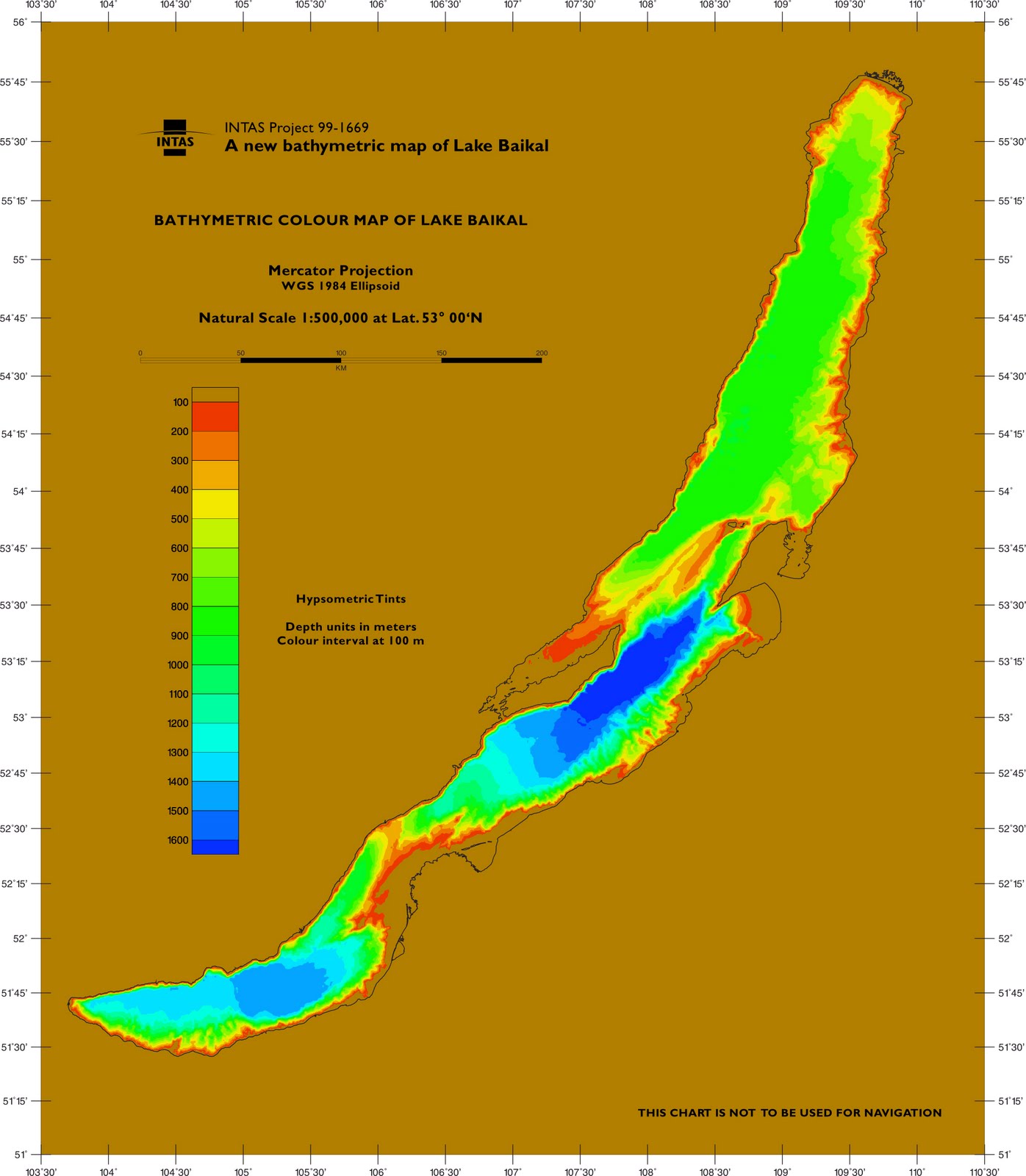
Although not very wide, this lake is very deep — up to 1.6 km (1 mi) — and, in fact, the deepest lake on Earth.
Below is a nice 3D perspective image showing the bathymetry (light and dark blues) with the surrounding topography (greens, yellows, and reds).

I realize this isn’t technically a “seafloor” image, but I do show bathymetric images from lakes from time to time.
Geo-image extravaganza — my header photograph
This month’s installment of the geoscience blog carnival, The Accretionary Wedge, is hosted by Highly Allochthonous and is asking participants to highlight images of geoscience:
The theme that we’ve chosen is simple: we want to amass a gallery of all of your favorite geologically themed pictures.
This is a great idea — the geoblogosphere is very diverse and the compilation of everyone’s favorite images should be interesting. As you know, I love showing images here on Clastic Detritus (e.g., Friday Field Foto series and Sea-Floor Sunday series) so I’m happy to participate.
There are literally thousands of images I could sort through to try and pick one. So, what I decided to do is show the full photograph that makes up my header image at the top of the blog.
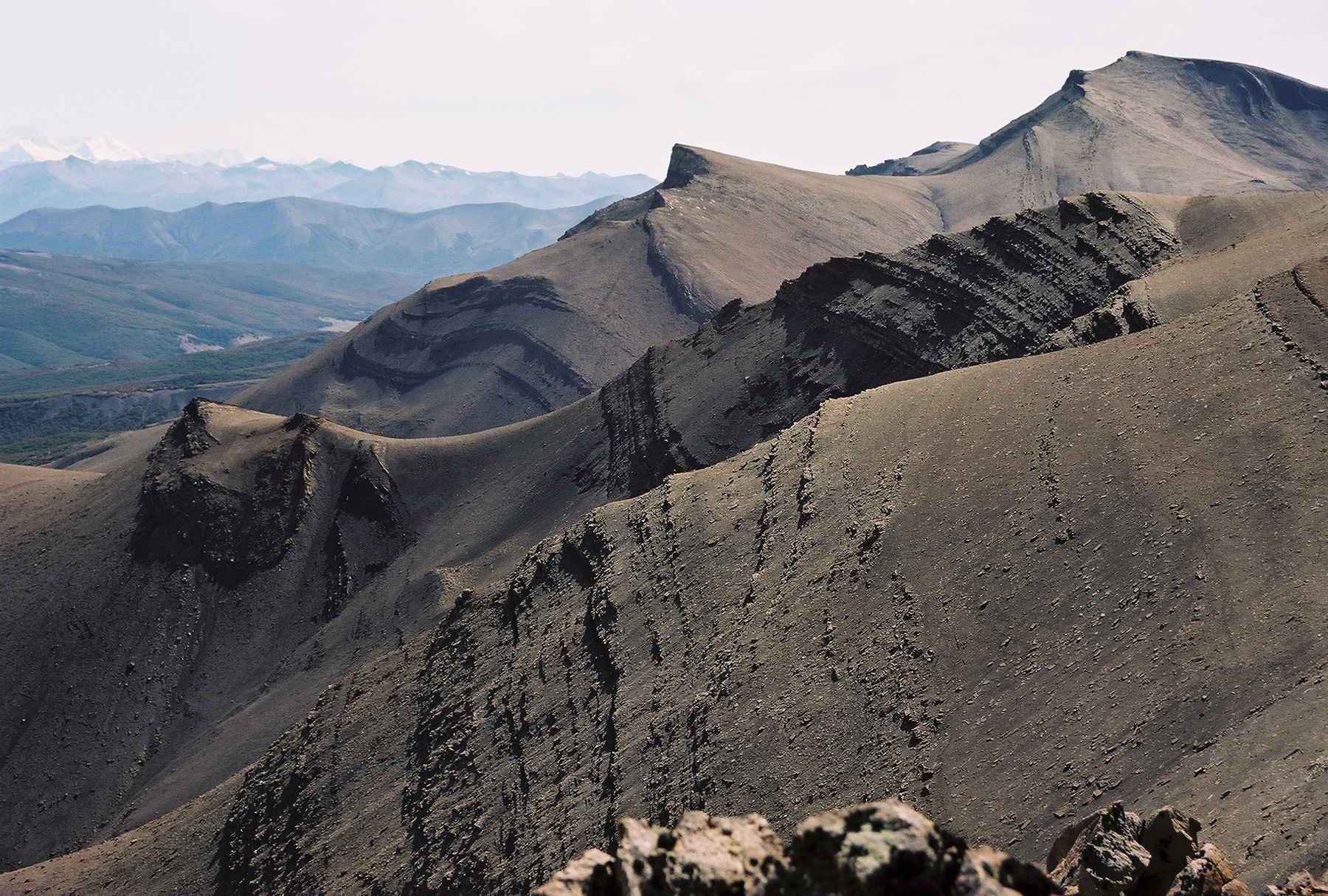
Cerro Divisadero, southern Chile (© 2010 clasticdetritus.com)
This is a photograph I took in 2004 on my very first trip to Patagonia. We visited this particular location, called Cerro Divisadero, on a 3-day reconnaissance excursion. The following two years I went back with colleagues and field assistants to document the sedimentological features and stratigraphic architecture, which became part of my PhD dissertation and this paper.
I’ve always liked this image — I’m not sure why exactly. I like the juxtaposition of the barren cliff faces and slopes in the foreground with the distant mountains and Patagonian ice cap in the background. It also conjures up fantastic memories of my various adventures to this part of the world.
–
see all posts tagged with ‘Patagonia’ here


 Clastic Detritus