Friday Field Foto #44: Patterns in the beach
Way back in Friday Field Foto #4, I showed a photograph of some interesting patterns in a California beach. I find these mini-sedimentary systems very pleasing to look and it’s one of my favorite things to do at the beach.
The field trip I went on last week in Tierra del Fuego looked at some beach-cliff exposures of Miocene rocks. We arrived as the tide was going out … the tidal range there is quite large … I forget how much, but once it hit the flats, it shot out nearly a kilometer in less than an hour. The result was an expansive sandy tidal flat with countless nooks and crannys of these mini-sedimentary systems and more ripples than you could possibly see before the tide came back.
Here are a few photographs.
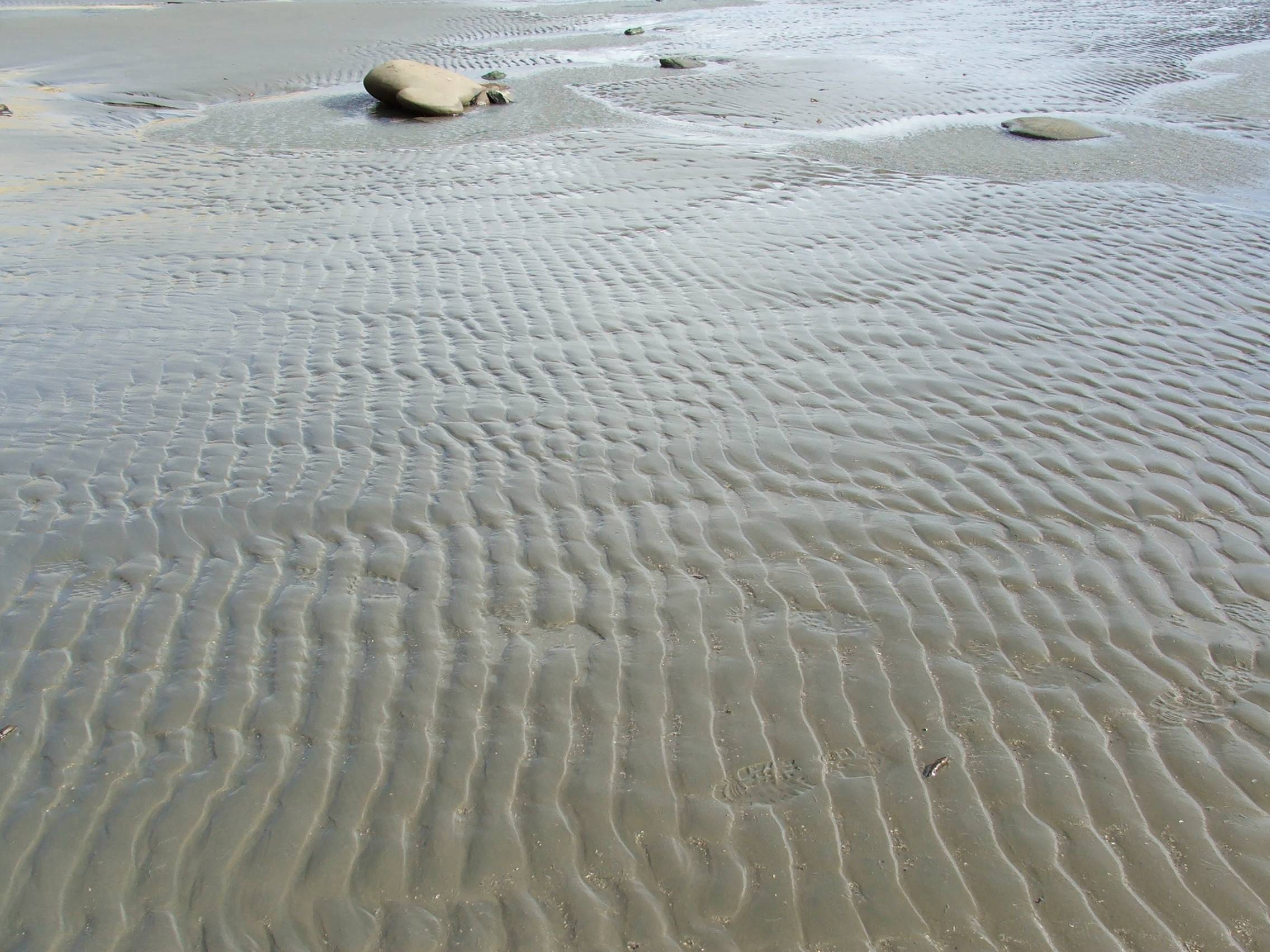
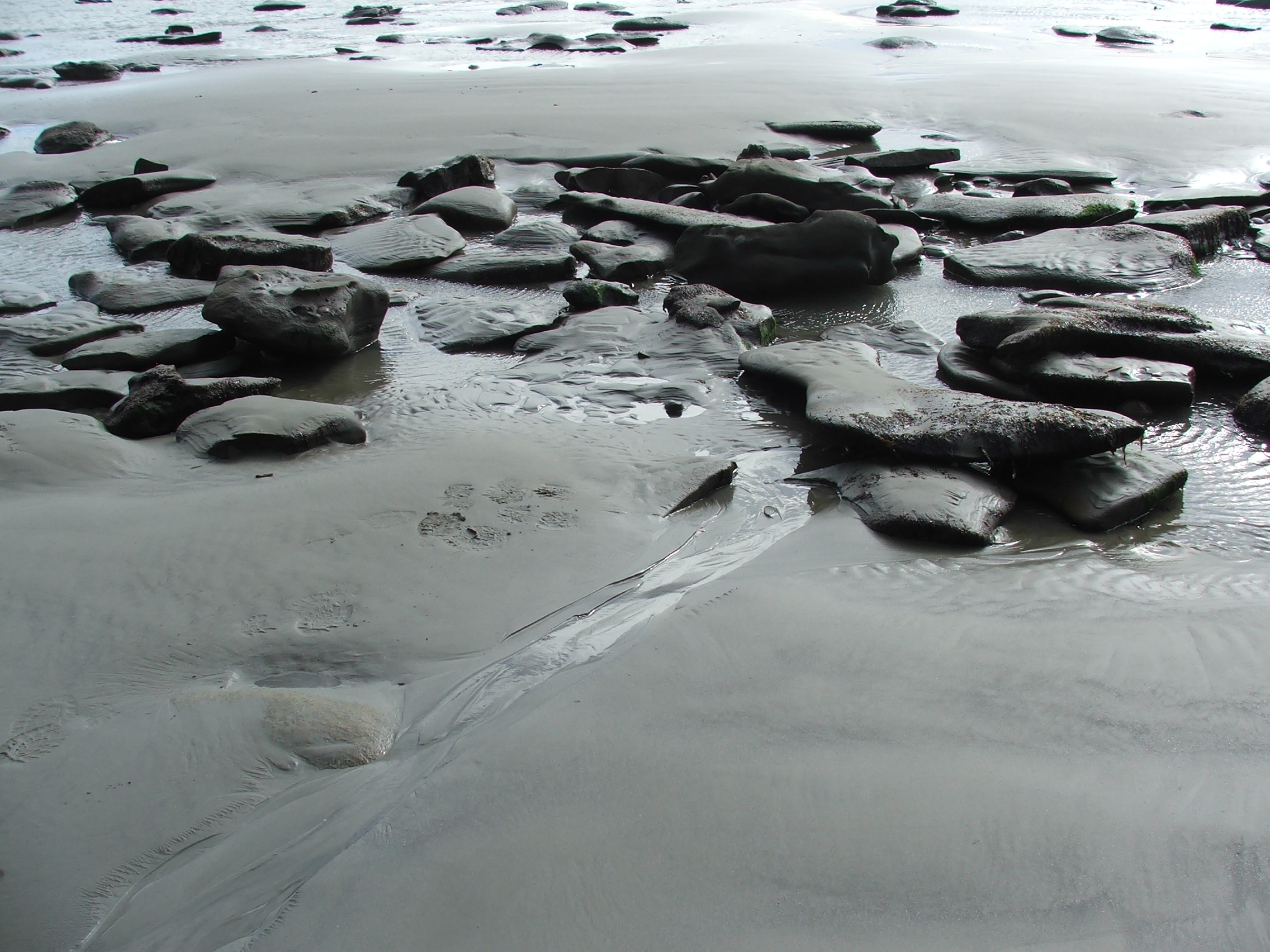
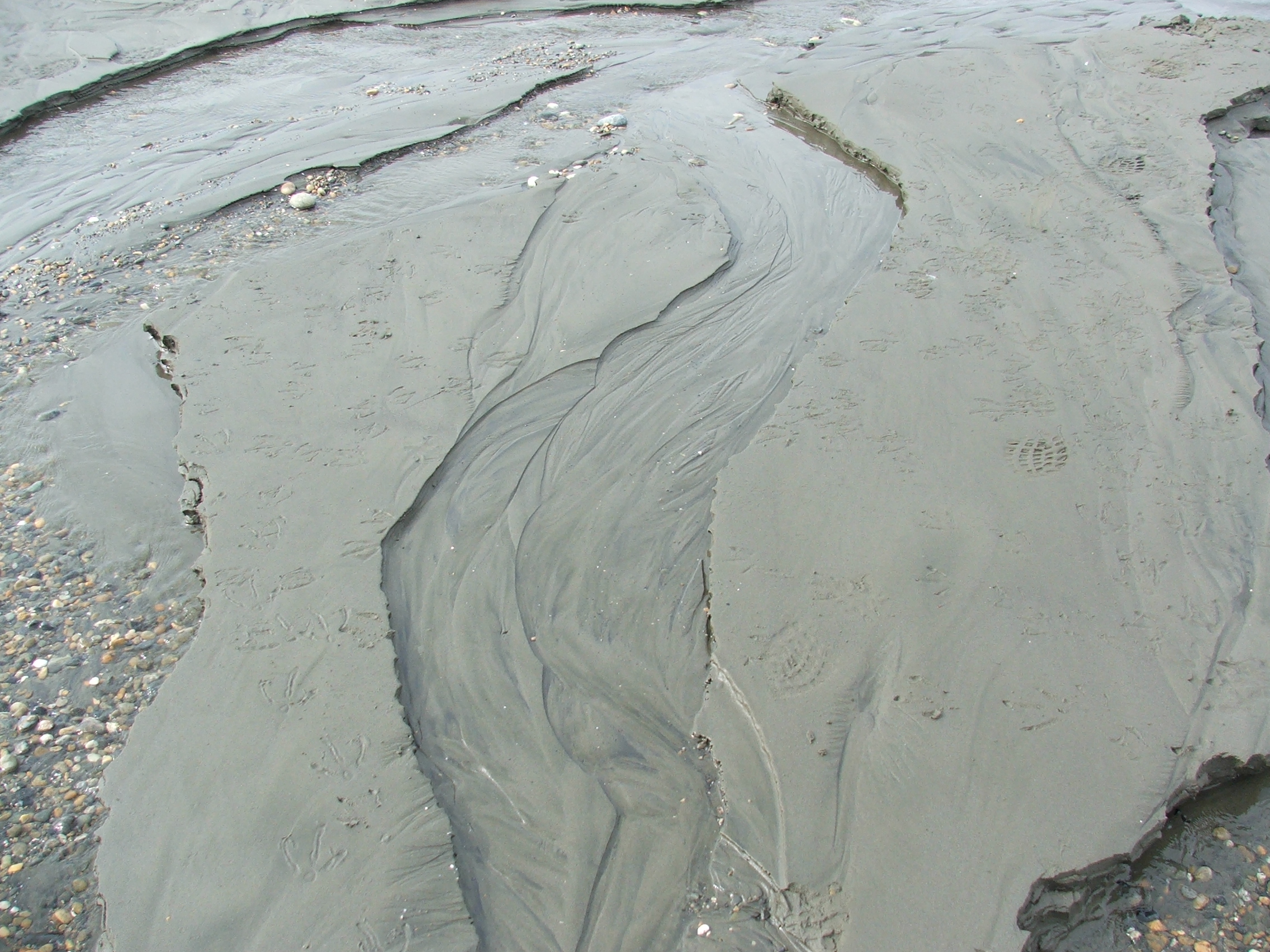
Happy Friday!
~~~~~~~~~~~~~~~~~~~~~~~~~~~~~~~~~~~~~~~~~~~~~~~~~~~~~~~~~~~~~~~~~~~~~~~~~~
Conference wrap-up #2: Sediment delivery from shelf to basin
The focus of the research conference I attended last week was to revisit the mechanisms and processes that are responsible for getting terrigenous (i.e., continentally-derived) sediment from river mouths and coastal areas out to the shelf or deep-marine basins.
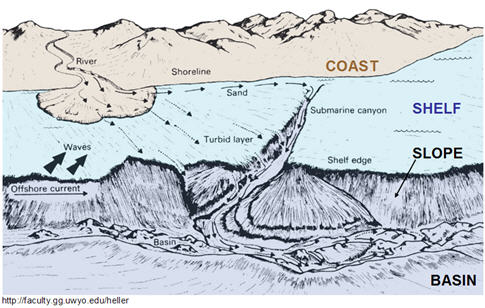
When it comes to sediment coarser than mud, sediment gravity flows are one of the key processes for transporting material into the deep sea. These are bottom-hugging sediment-laden flows that carve canyons, create channel-levee morphology, build submarine fans, and so on.
I’ve posted numerous times about the products of sediment gravity flow processes … that is, the sediments or rocks. But, these deposits are really only recording the last moments of the life of a sediment gravity flow … they are the depositional processes. What about the processes at the beginning of a flow?
Considering how these flows begin falls under the term initiation mechanisms. We do not have a very good understanding of these processes. Firstly, observation of submarine processes, in general, is extremely challenging. Secondly, the occurrence of sediment gravity flow events is common over geologic time scales, but infrequent over human time scales. So, even if we could observe them, we might have to wait a couple hundred years for one to occur.
This conference was aimed at revisiting the ideas about initiation mechanisms. This is a fascinating subject because it brings together geologists who focus on preserved products in the rock record with oceanographers who study and monitor active processes in the modern.
My next post (another day or two) will go into a little more detail about specific initiation mechanisms and examples.
~~~~~~~~~~~~~~~~~~~~~~~~~~~~~~~~~~~~~~~~~~~~~~~~~~~~~~~~~~~~~~~~~~~~~~~~
Why don’t I read fiction?
 Like many, in my idle time outside of work or writing/revising papers, I try and read books. If you’re reading this post, you are likely a fan of reading. I’ve always noticed a big difference between me and my fiancé … she loves reading fiction, while I almost always pick non-fiction, and typically something science-related. Yet, we are both scientists by training.
Why don’t I read fiction? It’s not that I don’t enjoy it when I do read fiction … I certainly do. My fiancé lent me some Tom Robbins and I enjoyed it thoroughly. But, when I find myself in a bookstore, I’m drawn to the science/nature section … I can’t help but flipping through the various popular science books … happens every time.
For some reason, I feel that if I’m reading I should be broadening my knowledge … or something like that.
Who else is like me? Any of you out there prefer reading fiction in your spare time? Just wondering.
–
image from here
~~~~~~~~~~~~~~~~~~~~~~~~~~~~~~~~~~~~~~~~~~~~~~~~~~~~~~~~~~~~~~~
New Grand Canyon study on Science Friday
This morning on the way to work I listened to NPR’s Science Friday podcast (I’m a bit behind and still catching up). It was about the recent paper in Science discussing new dates from speleothems in the Grand Canyon region that are interpreted by the authors of the paper to push the age of canyon formation from ~6 million years to ~17 million years.
Andrew over at About.com has already posted about this and has some great links to relevant information.
The reason I mention this is because a retired USGS research scientist who has worked on the Grand Canyon for decades called into the show and really took the author of the Science paper to task on their conclusions. It is quite entertaining … the Science paper author sounds a bit taken aback and stumbles a bit in trying to defend their interpretation. I enjoy contentious scientific debates.
Give it a listen … you can download/subscribe to Science Friday here.
~~~~~~~~~~~~~~~~~~~~~~~~~~~~~~~~~~~~~~~~~~~~~~~~~~~~~~~~~~~~~~~~~~~~~~~
Conference wrap-up #1: International flavor
As I mentioned yesterday, I spent last week at a small research conference in Tierra del Fuego.
The first aspect of the meeting I wanted to post about is neither the science nor the field trip … rather, it is about the international-ness of the meeting.
There were about 40 people at the conference … and about 12 countries: Argentina, Brazil, Venezuela, Trinidad, India, Indonesia, Canada, United States, England, Scotland, Australia, and Norway.
Although the conference was held in Argentina, the talks, posters, and overall scientific discourse was in English. I was thinking about how difficult it would be for me to give my talk in Spanish if I had to … but then, I was also thinking that I would get so much better at another language so much quicker if I was forced to learn it.
After only attending much bigger meetings in the States, I was very happy to interact with such an international crowd. This might not be a new thing for some of you, but it certainly was for me … in fact, I was only one of two participants from the United States.
Although the scientific discussions were very integrated, when it came time for socializing in the evenings, participants did tend to naturally subdivide into language/cultural groups. I usually ended up having drinks and dinner with those from the other failed British colonies (hee hee). We did have one big group dinner, which was tons of fun.
One of the outcrops we visited is the subject of an Argentinian PhD student who didn’t speak English fluently. So, he would talk about the rocks and his adviser translated for everybody … it worked pretty well. I know a little spanish and he knew a little english so we were able to communicate fairly well. At one point, however, we had a Brazilian translating my English into Spanish and vice-versa, all while trying not use his native Portuguese! Impressive.
Stay tuned for a couple more posts about this conference in the coming week.
~~~~~~~~~~~~~~~~~~~~~~~~~~~~~~~~~~~~~~~~~~~~~~~~~~~~~~~~~~~~~~
A great week in Tierra del Fuego
I’m back in California after quite a long journey home.
I spent the past six days at a research conference in Ushuaia, Argentina, which is in Tierra del Fuego and the self-proclaimed southernmost city in the world (almost 55 degrees south).
The focus of the conference was to revisit the variable mechanisms of sediment delivery from river mouths and coasts to the shelf and/or into deep-marine basins. It was very nice to go to such a focused conference like this … I have mostly been to the big meetings so far in my career. This conference had about 40 people and most everybody gave a talk or poster … so everybody was involved and engaged in the topic. There was three days of talks and then two days of a field trip to examine some Miocene outcrops on the northeastern (Atlantic) coast of Tierra del Fuego.
I’ll post about some of the highlights of the meeting soon … in the mean time, here are some photographs from the field trip.
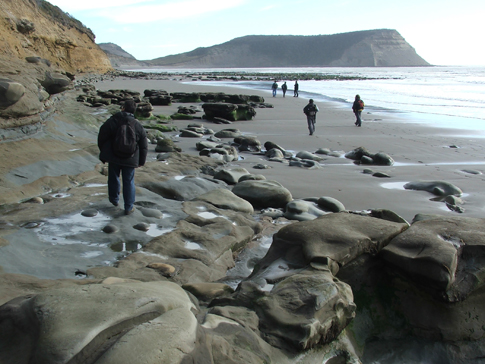
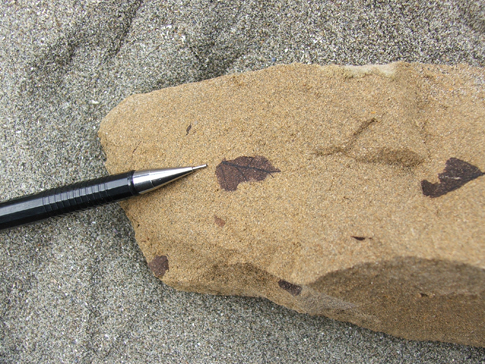
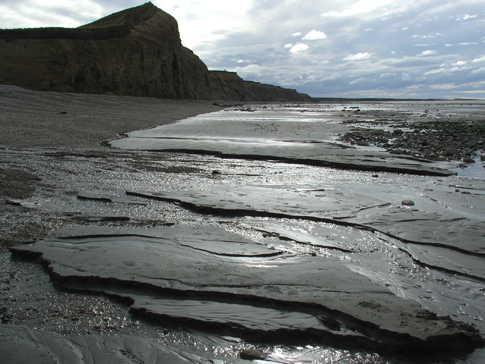
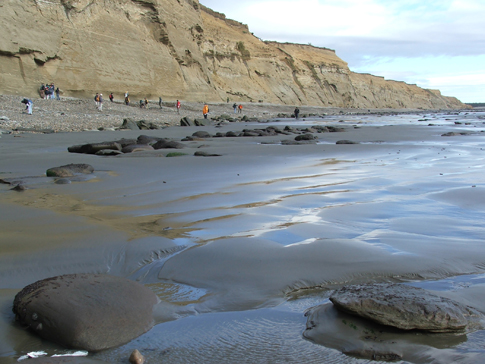
There was one bad thing about this trip … I left my iPod on the flight from Ushuaia to Buenos Aries … arghh!
~~~~~~~~~~~~~~~~~~~~~~~~~~~~~~~~~~~~~~~~~~~~~~~~~~~~~~~~~~~~
A few photos from Patagonia
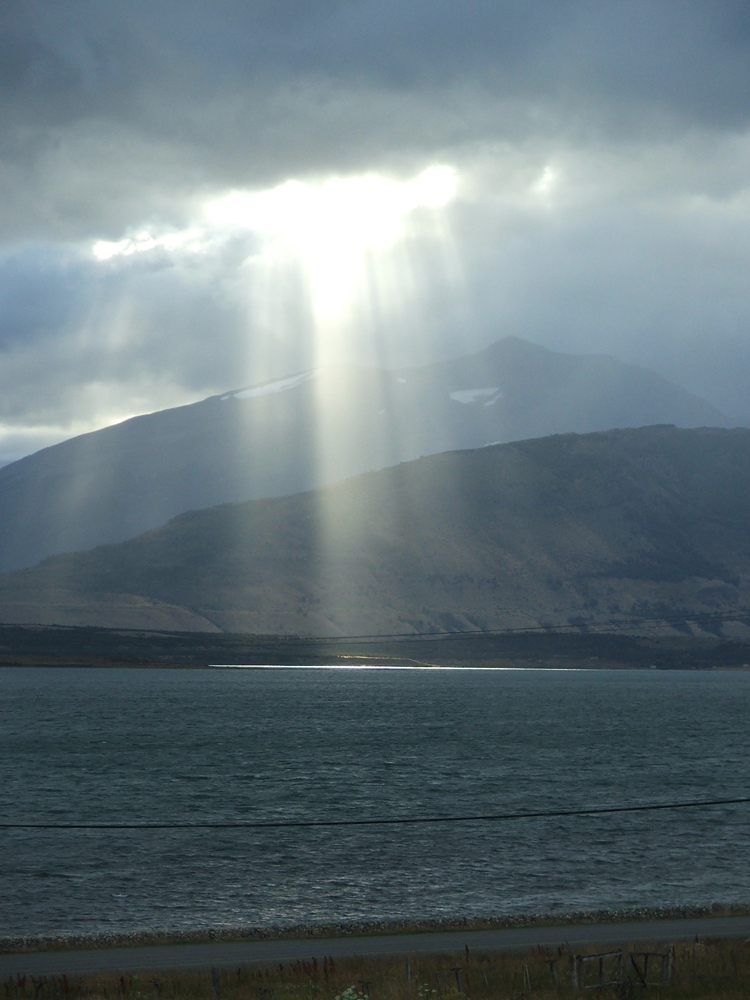
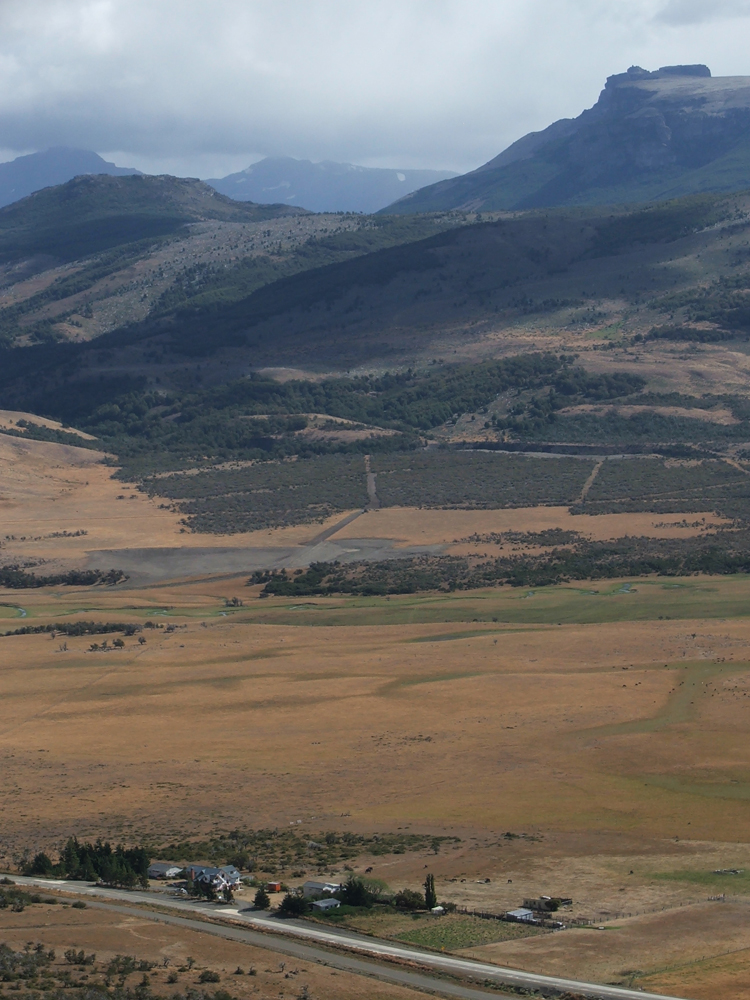
I’ve spent the last week or so in Chilean Patagonia co-leading a small, informal field trip around the rocks that me and several other students have worked on in the last several years. The weather was unbelievably good … almost too good. But, the last few days when we started collecting some new data the wind returned and all was how I remembered.
Here a few scenery shots for your enjoyment.


I’m now in Ushuaia, Argentina for a conference … hopefully I can get a post or two out this week.
~~~~~~~~~~~~~~~~~~~~~~~~~~~~~~~~~~~~~~~~~~~~~~~~~~~~~~~~~~~~~~~
Sea-Floor Sunday #13: Subaqueous fan delta, Bute Inlet
This is another time-released post while I’m out of town. I will leave comments open, but I probably won’t be able to address any questions for at least a few days.
~
Today’s image is from the most proximal part of Bute Inlet, which is a deep-water fjord (some get up to 700 m deep) in British Columbia, Canada. A classic paper from 1989 by Prior and Bornhold is often cited in current papers that discuss what happens to riverine sediment when it reaches the sea.
In this case, Prior and Bornhold document a subaqueous fan delta that has been building out the last several thousand years.

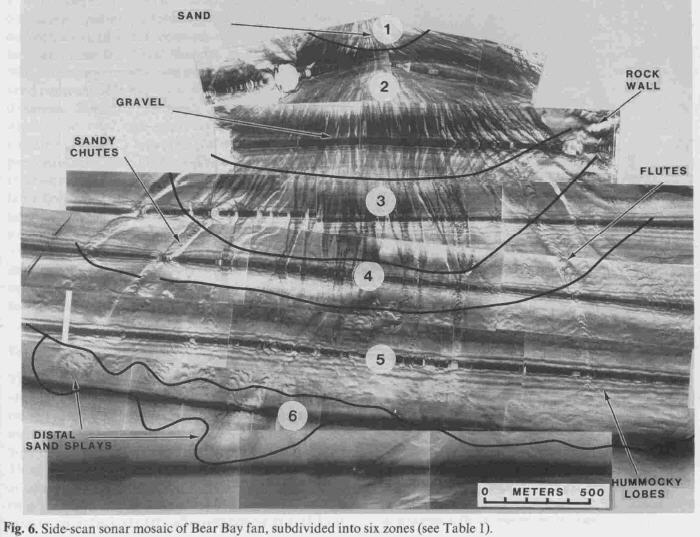
The image above is a side-scan sonar image of the fjord floor just offshore from the mouth of Bear Creek. If it looks a little old-school … well, it is … the data were acquired in 1986. Side-scan sonar methods were very much the state-of-the-art at that time. The straight dark lines going diagonally from lower left to upper right are artifacts of the acquisition. Just try and ignore those and look “through” them (kind of like when you are looking at an outcrop, you try and look through all the surficial diagenetic crud to see the primary features).
Note the exquisite distributary pattern coming out of the creek mouth.
They supplemented bathymetric and seismic-reflection profiles with some dives in a manned submersible and some grab samples to document the type and distribution of sediment on the fan. This image below summarizes that.
I’m not going to show them here, but then they present several photographs of the fan surface taken from the submersible at various points along the profile of the fan.
Finally, I’ll skip right to the summary figure … this block diagram puts it all together.

I recommend reading this paper if you are a sedimentary geologist because of the topic. But, I also recommend it if you want to read a well-written scientific paper. The data presentation is objective and systematic; the discussion is engaging and thought-provoking.
Although the data might be ‘old school’, some of the ideas they discuss and some of the implications of their work are very relevant in the current literature. Sometimes I see papers now that present new and interesting data, but mix the data and interpretation too much. I’m still learning how to avoid this myself.
~
Prior, D.B., and Bornhold, B.D., 1989, Submarine sedimentation on a developing Holocene fan delta: Sedimentology, 36, 1053-1076.
~
See all Sea-Floor Sunday posts here
~~~~~~~~~~~~~~~~~~~~~~~~~~~~~~~~~~~~~~~~~~~~~~~~~~~~~~~~~~~~~
Friday Field Foto #43: Miocene Paine Massif, Patagonia
Today’s photo is of the famous Paine Massif in Chilean Patagonia off in the distance. This granitoid laccolith complex intruded into the Cretaceous sedimentary rock in the Miocene (some researchers have interpreted this as a response to ridge subduction…more on that in the future).
Quaternary glaciation has carved these rocks into spectacular towers and rugged peaks that people from around the world come to visit. If you look to the left of the highest peaks you can see Glacier Grey coming off the Patagonian ice sheet. Parque Nacional Torres del Paine is becoming the trekker’s destination.

Paine Massif, Chilean Patagonia (© 2008 clasticdetritus.com)
This photo was taken from the top of a mountain 30-40 km to the south while we were collecting data. Being able to go places that no one else goes and getting views no one else gets is one of the greatest aspects of field geology. It’s not that people couldn’t have gone here, they just don’t. I suppose it’s understandable … if you travel all that way and don’t have tons of time, you’d probably rather see this up close.
Stay tuned for some posts chronicling my travels in the area. Maybe not as exciting as Alessia’s recent adventures in Antarctica, but I’ll have a few stories to share.
~~~~~~~~~~~~~~~~~~~~~~~~~~~~~~~~~~~~~~~~~~~~~~~~~~~~~~~~~~~~~~
Southbound
Clastic Detritus might be a bit quiet for the next couple of weeks. I’ve prepared a couple time-released posts so it’s not too quiet, but I won’t be able to answer questions or interact that well.
The tourism industry is being developed more and more each year in Patagonia. Every time I go down there (this is my 5th year) there are more internet cafes in the biggest town near where we do our work (Puerto Natales, Chile). So, I might have some time to post some updates from time to time.
With all the newish geo-related blogs nowadays, there’s plenty to read. Just check out my ‘Geoblogospheric Circulation’ feed on the sidebar or the individual blogs listed in ‘Geoscience Blogs’.
Crap … I gotta finish packing.
~~~~~~~~~~~~~~~~~~~~~~~~~~~~~~~~~~~~~~~~~~~~~~~~~~~~~~~~~~~~~~~


 Clastic Detritus